Distal Radius Fracture

Understanding Hand and Wrist Conditions and Available Treatments

Distal Radius Fracture Treatment Near You in Hoover and Birmingham, Serving Central Alabama

A distal radius fracture is one of the most common types of fractures. About one in six broken bones treated in the United States is a distal radius fracture. Patients who experience a wrist fracture can get care at Southlake Orthopaedics. With locations in Hoover and Birmingham-Grandview, Alabama, our multi-specialty team provides top-quality orthopedics and sports medicine care for central Alabama patients with arm injuries and other sports medicine conditions. Get in touch to learn more about how you can get less pain, more living.

Key Takeaways

  • A distal radius fracture is a break of the radius (forearm) bone at the wrist. It is extremely common, accounting for one in six of all bone fractures in the U.S.
  • Symptoms of a distal radius fracture include immediate and severe wrist pain, swelling, and bruising. The wrist may also look bent, crooked, or deformed.
  • Distal radius fractures are usually treated non-surgically by putting the wrist in a cast or splint. Surgery is recommended if the bone will not stay in place with a cast.
  • Southlake Orthopaedics treats bone fractures and other sports medicine conditions in Hoover and Birmingham-Grandview, AL, with a multi-specialty approach.

What Is a Distal Radius Fracture?

A distal radius fracture is a fracture of the radius bone. The radius is a long bone on the thumb side of the forearm. Together with the ulna, it makes up the structure of the forearm. A distal radius fracture occurs when the radius breaks at the end nearest the wrist. It may be further described based on different features of the break:

  • Intra-articular fracture: The break extends into the wrist joint.
  • Extra-articular fracture: The break does not extend into the wrist joint.
  • Open fracture: The broken bone has penetrated through the skin.
  • Comminuted fracture: The bone is broken into three or more small pieces.
  • Displaced fracture: The broken section of bone has moved out of place.
 

These terms let physicians communicate how the bone is broken, helping them plan the best possible treatment. Fractures that extend into the joint, break through the skin, or are broken into many pieces usually are more difficult to treat.

Dr. Jonathon Whitehead examining young patient’s wrist

What Are Symptoms of a Distal Radius Fracture?

Patients who suffer a distal radius fracture usually feel a distinct snap, pop, or grinding sensation at the moment of injury. This sensation is immediately followed by intense pain, swelling, and bruising. The pain often gets worse when touching the wrist. The wrist may also look bent or deformed, especially with displaced fractures.

In very severe fractures, the broken bone may compress or damage the nerves in the hand. This causes additional symptoms including numbness, tingling, or weakness in the fingers. If the fingers feel numb after a wrist injury, the person should get medical care immediately. Prompt treatment can prevent permanent nerve damage.

Child falling off bicycle

What Causes Distal Radius Fractures?

Distal radius fractures are most often caused by falling onto an outstretched arm. The fall creates more stress on the bone than it can withstand, cracking or snapping it. In young patients, this is often a high-impact accident. For example:

  • Falling from a ladder
  • Falling off a bike or scooter
  • Motor vehicle collisions
 

In older patients, distal radius fractures are common because of declining balance and bone density. However, they can also occur in younger patients and athletes.

How Are Distal Radius Fractures Diagnosed?

Physicians begin the diagnostic process with a physical examination. They ask about the patient’s symptoms and evaluate the wrist for swelling, tender areas, or visible deformity.

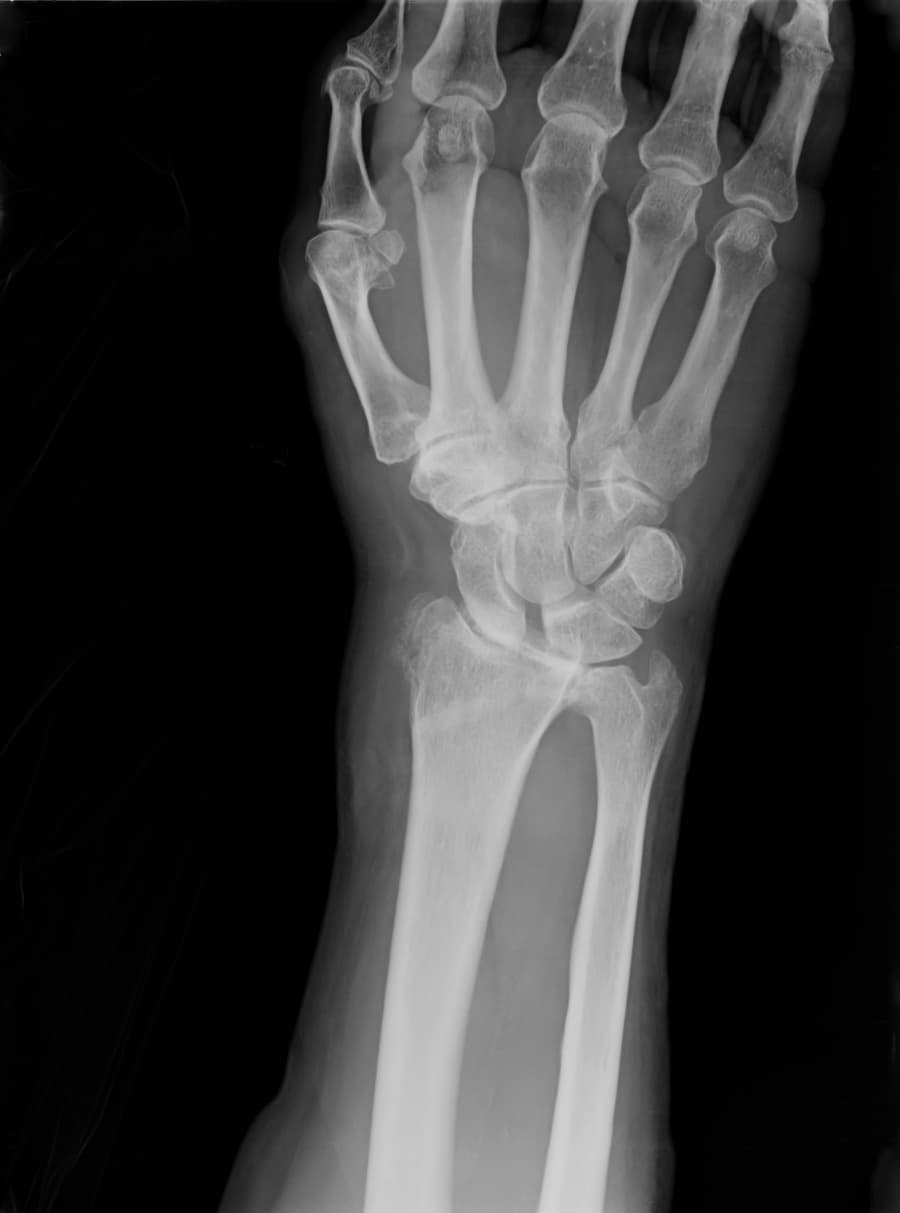
After the physical examination, the physician will order X-rays of the wrist. X-rays use high-powered rays to take pictures of skeletal structures. X-rays pass through the body, but denser structures such as bone absorb more of the radiation, creating detailed images of the wrist. The resulting image is used to locate the fracture, determine its type, and plan the best treatment.

X-ray showing distal radius wrist fracture

How Are Distal Radius Fractures Treated?

If the broken bone isn’t too far out of place, a distal radius fracture can be treated non-surgically. The physician will move the bone back into its correct position with a reduction, then place the wrist in a cast or splint while it heals. The cast or splint locks the bones in place to keep the broken fragments from moving around during the healing process. Patients are usually in a cast for four to six weeks. Afterward, they may start physical therapy to improve strength in the wrist.

In some cases, the physician cannot realign the bone using external pressure alone. Surgery is required to put the bone back into position so it heals correctly. The physician makes an incision over the broken bone. While protecting the nerves and tendons, they carefully guide the broken fragment back into the correct position. Metal plates or screws may be used to hold the bone in place while it heals.

Meet Our Team

When you suffer a sports injury, you want the best care possible to get yourself back to normal. Southlake Orthopaedics is a multi-specialty team that treats a wide variety of sports medicine conditions, including fractures, to get patients back to the activities they love. Meet our hand and wrist doctors below:

Get Treatment for Distal Radius Fractures Near You in Alabama

Correct medical care ensures that a broken arm heals correctly, helping you get back to the activities you love. Get high-quality sports medicine treatment at Southlake Orthopaedics. We are located in Hoover and Birmingham-Grandview, serving patients across central Alabama with multi-specialty care. Contact us today to learn more or to schedule an appointment near you in Alabama.

Frequently Asked Questions About Distal Radius Fractures

Do distal radius fractures require surgery?

No, not all distal radius fractures need surgery. Many fractures can heal completely with a few weeks in a cast, followed by a few weeks of physical therapy. Surgery is only required when the broken bone can’t be held in place with a cast alone. In these cases, metal plates or screws may be used to lock the fragments together until they heal.

How long will I be in a cast after a distal radius fracture?

Most patients wear a splint or cast for about four to six weeks after a distal radius fracture. The length of time depends on the type of fracture and its severity. The physician monitors the fracture with regular X-rays. When the X-ray confirms that the bone has sufficiently healed, the cast will be removed.

How long does it take a distal radius fracture to heal?

Most distal radius fractures take about three months to heal enough to use the wrist. At this point, you should be able to resume normal activities, although the wrist may still be fragile. Full recovery can take up to a year before the bone is fully back to its original strength.

What is the difference between an extra-articular and an intra-articular fracture?

Extra-articular radius fractures do not extend into the wrist joint. This makes them easier to treat, and they usually heal reliably. Intra-articular fractures extend to the very end of the radius, meaning that they involve the joint. This fracture type can be more difficult to treat.

How do I bathe while wearing a cast?

Water can weaken your cast or splint, making it less effective at stabilizing your wrist. Moisture can also get trapped inside the cast and cause skin problems. Cover your arm with a plastic bag while showering to keep the cast from getting wet. If the cast does get wet, speak with your physician about whether it needs to be replaced.