Biceps Tendon Rupture Treatment

Understanding Arm Conditions and Available Treatments

Biceps Tendon Rupture Treatment in Alabama

The biceps muscle is responsible for a wide range of motions, including arm rotations and most heavy lifting. Injuries to the biceps tendons can impede your physical ability and lifestyle. Patients who experience a biceps tendon rupture can find treatment at Southlake Orthopaedics. We are a multi-specialty team of physicians delivering advanced care near you in Hoover and Birmingham-Grandview, Alabama. Get in touch today to begin your care.

Key Takeaways

  • A biceps tendon rupture is an injury to one of three tendons that connect the biceps muscle to the shoulder and elbow bones.
  • Symptoms of a biceps tendon tear include a sudden pop followed by pain, swelling, arm weakness, and visible deformities in the upper arm or elbow.
  • Most biceps tendon ruptures can be treated conservatively, but surgery may be required to repair severe tears at the elbow.
  • Southlake Orthopaedics provides comprehensive orthopedic care to help Alabama residents get less pain, more living.

What Is a Bicep Tendon Rupture?

The biceps muscle is the major muscle found on the front of the upper arm. It is responsible for flexing the elbow and rotating the forearm. The bicep has three tendons that connect it to the bones of the arm, allowing the bicep to move the arm when it flexes. These are:

  • The long head, which attaches to the top of the shoulder socket
  • The short head, which attaches to the shoulder blade (scapula)
  • The distal tendon, which attaches to the forearm (radius)
 

Bicep tendon ruptures occur when one of these tendons is injured. Tendon ruptures can be partial, meaning that the tendon is stretched or torn but not completely severed. They can also be complete, meaning that the tendon has completely pulled loose from the bone. The severity of the tendon rupture influences the treatment options available and their expected outcomes.

Woman exercising with dumbbells

What Are the Symptoms of a Bicep Tendon Rupture?

The hallmarks of a tendon tear are an audible pop or snap, followed by sudden pain in the area of the tendon. The symptoms that follow depend on which tendon is injured. If the long or short head is torn, then patients may experience:

  • Biceps cramp when using the arm
  • Bruising of the upper arm
  • Pain or tenderness in the shoulder and elbow
  • Weakness in the shoulder and elbow
  • Difficulty twisting the hand
 

If the distal tendon ruptures, then the pain will be felt closer to the elbow.

  • Swelling at the front of the elbow
  • Bruising in the elbow and forearm
  • Weakness when bending or twisting the forearm
  • A gap or hollow space in front of the elbow
 

Both types of biceps tendon rupture also cause a “Popeye deformity”, or a visible bulge in the upper arm. This bulge is caused by the muscle recoiling without a tendon to hold it in place.

What Are the Causes and Risk Factors of a Biceps Tendon Rupture?

Biceps tendon ruptures are usually caused by sudden injury. Tears at the elbow occur when the elbow is forced straight, often when lifting something heavy. The biceps strain to keep the elbow bent, but the weight of the load is too much to lift safely. The tendon snaps as the elbow forcibly straightens. Tears at the shoulder occur when lifting or when falling on an outstretched arm. The sudden force tears the tendons at the shoulder, leading to injury.

Tendon ruptures can also be caused by overuse. This type of injury is the result of gradually wearing down the tendon due to age and repetitive stress. Without the opportunity to recover, the tendon fibers begin to fray and eventually snap.

Anyone can injure their biceps tendon, but certain health and lifestyle factors make it more likely. Because tendons wear down over time, older patients are more likely to experience an injury than younger ones. People who play sports or work jobs that require repetitive overhead movements are also at risk. Finally, smoking and long-term corticosteroid use can both weaken tendons, making them weaker and more vulnerable to rupturing under stress.

How Are Biceps Tendon Injuries Diagnosed?

To diagnose a biceps tendon rupture, physicians start with a physical examination. They ask questions about the patient’s symptoms and how the injury occurred. They will then feel the injured arm for gaps or bulges created by a misshapen muscle. The physician may also test the arm’s ability to rotate against resistance, especially in comparison to the other, uninjured arm.

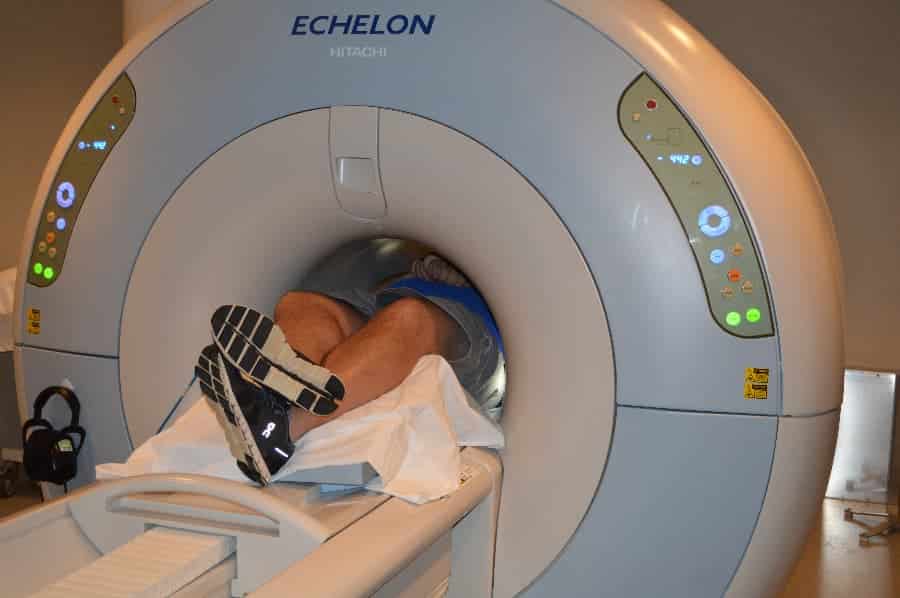
The results of the physical examination are confirmed with medical imaging. Magnetic resonance imaging (MRI) scans deliver clear images of soft tissues, helping the physician diagnose both partial and complete biceps tendon tears. An X-ray may also be requested. Although X-rays cannot show soft tissues, they may reveal other problems that cause shoulder and elbow pain.

Patient inside an MRI machine at Hoover location
Woman wearing a blue arm sling

What Are the Treatment Options for Biceps Tendon Ruptures?

Most patients don’t need surgery for a biceps tendon rupture. The pain goes away by itself if the arm is given time to rest and heal. Ice packs and nonsteroidal anti-inflammatory drugs (NSAIDs) help to control the symptoms while the arm recovers. Once the pain gets better, physical therapy helps to restore mobility and strengthen the arm to prevent a second injury.

Very severe biceps tendon ruptures might need surgery, especially if the patient wants to get back to sports activities. The goal of biceps tendon surgery is to reattach the tendon using drilled holes or small metal implants. A complete recovery takes three to four months. Once again, physical therapy plays an important role in strengthening the arm, improving flexibility, and reducing the risk of reinjury.

Meet Our Team

Southlake Orthopaedics takes a comprehensive approach to care, supporting patients at every stage of their recovery journey, from diagnosis through rehabilitation. This approach is made possible by our skilled, multi-disciplinary team treating arm and elbow conditions, including:

Get Treatment for Biceps Tendon Ruptures in AL

Don’t let a sudden injury get between you and the sports you love. Experience less pain, more living at Southlake Orthopaedics. Our team offers every level of care, including non-invasive and surgical treatments, to help you bounce back from arm conditions and injuries. Contact us to learn more about care options for biceps tendon ruptures or to schedule an appointment near you in AL.

FAQs about Biceps Tendon Ruptures

Who is at risk of a biceps tendon rupture?

Biceps tendon ruptures are most common in older individuals whose tendons have worn down due to age and heavy use. They are also common in athletes, people who work manual labor jobs, and people who smoke.

Is surgery required for biceps tendon tears?

Surgery is not usually required for biceps tendon tears. Most patients get better if they rest the arm and participate in physical therapy. Surgery is only necessary for severe tears, especially those that happen at the elbow.

Why is physical therapy important for biceps tendon ruptures?

Physical therapy uses targeted exercises and stretches to improve the biceps’ strength and flexibility. It helps prevent muscle loss during recovery, strengthens the arm, and reduces the risk of reinjury.

Are there long-term side effects from a biceps tendon rupture?

Biceps tendon ruptures may cause long-term arm weakness or deformity, even after successful treatment. These issues are usually mild enough not to disrupt the patient’s lifestyle.

Can biceps tendon ruptures be prevented?

Biceps tendon ruptures cannot always be prevented. Patients can reduce their risk factors by stretching before exercise, following safe lifting procedures, and avoiding smoking.