Shoulder Impingement

Understanding Shoulder Conditions and Available Treatments

Shoulder Impingement Treatment Near You in Hoover and Birmingham, Serving Central Alabama

Shoulder pain can make reaching overhead, lifting objects, or sleeping on your side uncomfortably difficult. One common cause of shoulder pain is shoulder impingement. At Southlake Orthopaedics, patients across central Alabama, including Hoover and Birmingham-Grandview, receive expert care for shoulder injuries and other chronic joint conditions. Learn more about our orthopedic services near you in Alabama.

Key Takeaways

  • Shoulder impingement occurs when soft tissues, such as the rotator cuff or bursa, in the shoulder are compressed.
  • Pain is often felt when lifting the arm overhead.
  • Left untreated, shoulder impingement can lead to rotator cuff tears and longer recovery times.
  • Southlake Orthopaedics offers comprehensive shoulder evaluation and personalized treatment plans for patients across central Alabama.
Young bearded runner with headphones grabbing shoulder in woods

What Is Shoulder Impingement?

Shoulder impingement occurs when soft tissues get squeezed between the bones when you lift your arm.

The shoulder is one of the most mobile joints in the body. However, that mobility means that the space between the top of your arm bone (humerus) and the bony roof of your shoulder (acromion) is tight. Running through that space is the subacromial bursa, a fluid-filled sac that reduces friction, along with the tendons of the rotator cuff.

Shoulder impingement can develop in two different ways:

  • Structural impingement involves a bone spur or an unusually shaped acromion that narrows the space, leaving less room for the soft tissues to move.
  • Functional impingement happens when the mechanics of your shoulder are off.

The latter is more common. Weak rotator cuff or shoulder blade muscles, poor posture, or imbalanced movement cause the humerus to sit too high in the joint when your arm is lifted. This crowds the space. As a result of this repeated pinching, you develop pain and inflammation that can cause damage to your tendons over time.

What Are the Symptoms of Shoulder Impingement?

At first, shoulder impingement symptoms may be mild and easy to ignore. Most patients notice them when they’re reaching overhead, behind the back, or across the body. Common signs include:

  • A dull ache in the outer shoulder or upper arm
  • Sharp pain when lifting the arm to the side or overhead
  • Discomfort reaching behind the back, such as when fastening a seatbelt or tucking in a shirt
  • Weakness in the shoulder when lifting or rotating the arm
  • Pain that wakes you up at night, especially when you’re lying on the affected shoulder
 

The classic sign of impingement is what’s known as a painful arc. This is a range of arm elevation between 60 and 120 degrees, where your pain spikes before it dips as you move your arm upward. If that pain pattern sounds familiar, it’s worth making an appointment with your doctor.

What Are the Causes and Risk Factors of Shoulder Impingement?

Shoulder impingement is often caused by several factors working together to reduce the space in the shoulder or change the way your joint moves. These include:

  • Repetitive overhead activity: Swimming, throwing, painting, stocking shelves, and any work or sport that puts stress on your shoulder joint is the biggest cause.
  • Rotator cuff weakness: The rotator cuff muscles keep the ball of your shoulder in the center of your socket when you move your arm. When they are weak, the humerus drifts upward and crowds the space.
  • Poor posture: Rounded shoulders from hours sitting at your desk can make existing shoulder problems worse by changing how your shoulder blade is oriented.
  • Age: Tendons and bursae become less resilient over time, and you’re more likely to develop bone spurs.
 

While shoulder impingement is most often diagnosed between the ages of 40 and 60, anyone can develop it. For example, younger athletes who play basketball or baseball are at an increased risk.

How Is Shoulder Impingement Diagnosed?

At Southlake Orthopaedics, we start all our diagnostic visits the same way: with a full physical evaluation and in-depth conversation. Your doctor will ask about when your symptoms started, what makes them better or worse, your activity level, and your work and sports history.

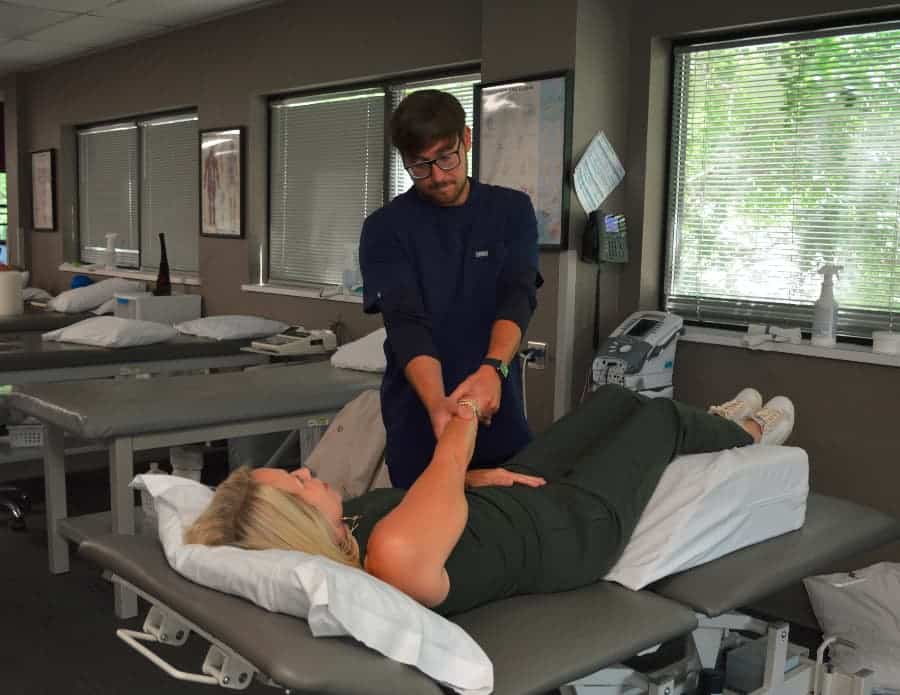
From there, we use a physical exam to assess your range of motion and strength. We use these tests to identify which specific movements or positions cause you pain. There are two standard maneuvers we use to confirm whether a shoulder impingement is causing your symptoms: the Neer test and the Hawkins-Kennedy test, both of which consist of having the patient performs specific movements while the doctor observes the effects on the bones and muscles. We’ll position your arm to compress the subacromial space. If you have pain, you most likely have an impingement.

Additionally, we’ll use imaging scans to determine whether there’s any further damage. X-rays help us identify bone spurs, assess the shape of the acromion, and rule out arthritis. Magnetic resonance imaging (MRI) scans give us a clear picture of the soft tissues inside the joint. Because shoulder impingement and a partial rotator cuff tear can look similar, these tests help us create the right treatment plan.

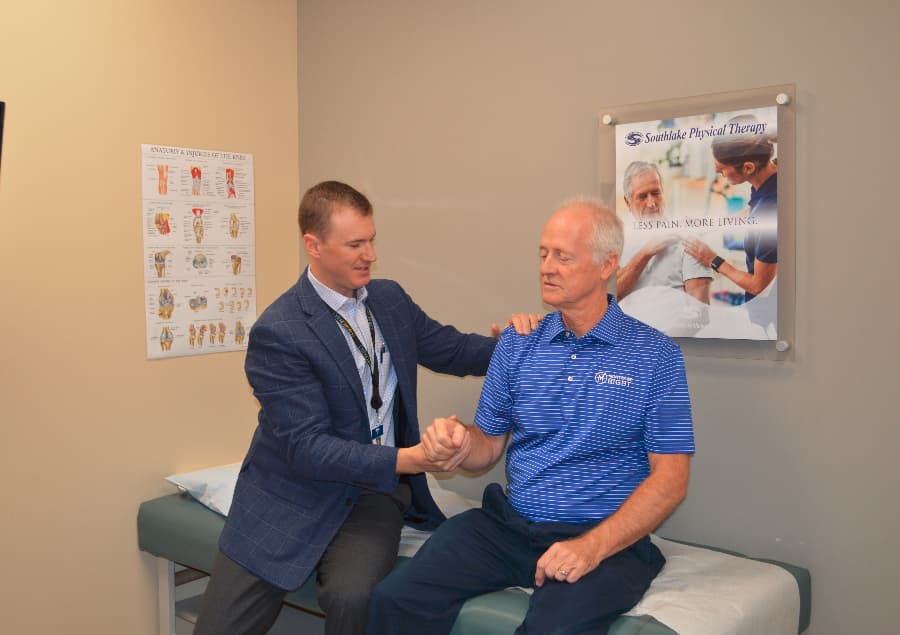
Dr. Jonathan Isbell examining patient for shoulder impingement
Treatment option for shoulder impingement

What Are the Treatment Options for Shoulder Impingement?

The good news is that shoulder impingement responds well to conservative treatment and doesn’t always require surgery. Most patients see improvement without ever needing a procedure.

At Southlake Orthopaedics, we start with physical therapy to address the underlying causes, rather than just the pain. Rehab helps:

  • Strengthen the rotator cuff and the muscles that stabilize the shoulder blade
  • Restore your range of motion
  • Correct the movement patterns contributing to impingement
 

Posture work is often also included. Sitting at a desk or using a computer or laptop for too long can make your symptoms worse.

Activity modification can also help reduce your symptoms. While you don’t have to stop all exercise, it’s important that you limit activities that put a strain on your shoulders, including throwing or climbing. We’ll also prescribe anti-inflammatory medication to help control your pain. If your pain is severe, we’ll discuss a corticosteroid injection to help reduce inflammation, so you can focus on your rehabilitation.

If you’re still having significant symptoms three to six months after starting treatment or your imaging shows structural changes, we’ll discuss scheduling you for surgery. Arthroscopic subacromial decompression smooths the underside of the acromion and removes any bone spurs or thickened tissues that are causing the impingement. This outpatient procedure is minimally invasive and can also fix rotator cuff tears.

Meet Our Team

At Southlake Orthopaedics, our board-certified physicians are experts at providing top-notch shoulder care. We take a collaborative approach to patient care, and our sports medicine professionals work with our orthopedic specialists and surgeons to ensure you receive the best treatment possible. We take the time to explain what is happening, answer your questions, and build a treatment plan around your specific goals and lifestyle. Meet our team below:


Find Shoulder Impingement Treatment Near You in Alabama

Shoulder impingement doesn’t have to limit your daily life. With the right care from Southlake Orthopaedics, you can reduce pain and restore movement. We serve patients across central Alabama from our convenient locations near you in Hoover and Birmingham-Grandview. If your shoulder pain is persistent or worsening, contact us today to schedule an appointment near you in central Alabama.

FAQ About Shoulder Impingement

Can shoulder impingement heal on its own?

Mild cases of shoulder impingement may improve with rest, but treatment is often needed to fully resolve symptoms.

How long does recovery from shoulder impingement take?

Most patients improve within a few weeks to a few months if they modify their activities and follow their physical therapy exercises.

Is surgery necessary for shoulder impingement?

Surgery isn’t usually required. We only consider it if your symptoms don’t improve with conservative treatment.

What activities should I avoid with an impinged shoulder?

Avoid playing basketball, baseball, and lifting heavy objects above your head.

When should I see a doctor about shoulder impingement?

You should reach out to your doctor if your symptoms are worsening, don’t go away after reducing your activity levels, or if you develop numbness.