Shoulder Bursitis

Understanding Shoulder Conditions and Available Treatments

Shoulder Bursitis Treatment Near You in Hoover and Birmingham, Serving Central Alabama

The shoulder is one of the most versatile joints in the body. It can rotate up, down, and to both sides, giving the arms a wide range of movement. Unfortunately, this flexibility makes the shoulder vulnerable to pain. Patients suffering from shoulder bursitis can find quality orthopedic care at Southlake Orthopaedics. We are a multi-specialty team of physicians that supports patients at every stage of recovery, from diagnosis through the end of rehabilitation. Find us near you in central Alabama.

Key Takeaways

  • Shoulder bursitis occurs when the bursae, small sacs filled with a jelly-like fluid, become inflamed.
  • Symptoms of shoulder bursitis include shoulder pain, swelling, inflammation, redness, and a reduced range of motion.
  • Shoulder bursitis is usually treated with conservative means such as rest, ice, and pain relief medications. Surgery is rarely required.
  • Southlake Orthopaedics provides comprehensive orthopedic care for patients suffering from shoulder bursitis and other sports injuries.

What Is Shoulder Bursitis?

Shoulder bursitis, also known as subacromial bursitis, is inflammation of the bursae in the shoulder. The bursae are small sacs filled with a jelly-like fluid. They are located in joints, where they act as cushions between the bones and the tendons. The shoulder bursae work to reduce friction, allowing the tendon to slide smoothly over the bone without getting damaged.

Bursitis develops when something injures or irritates the shoulder bursae, causing them to become inflamed. The bursa swells and produces more fluid to cushion itself, becoming very thick and lumpy as a result.

Acute vs. Chronic Bursitis

Bursitis can be acute or chronic. Acute bursitis occurs as a one-off incident, usually after an injury. Chronic bursitis continually comes back in repeated episodes over months or years. Chronic bursitis is the most common type of bursitis.

Athletic person holding shoulder in pain

What Are the Symptoms of Shoulder Bursitis?

Bursitis symptoms can appear suddenly or build up gradually. The pain may feel like a dull ache or like a sharp pinch. It usually gets worse when the shoulder is put under pressure, such as when sleeping on the side or when lifting the arm above the head. Other symptoms may include:

  • Swelling or redness
  • Stiffness
  • Reduced range of motion
  • Tenderness, even to a light touch
  • Discoloration or redness
  • A feeling of heat or warmth
 

Shoulder bursitis can feel similar to other conditions and sports injuries that affect the shoulder. If a person is experiencing pain, swelling, or reduced mobility, then they should speak with a physician to get their symptoms diagnosed.

What Causes Shoulder Bursitis?

Shoulder bursitis usually develops because of overuse. Repeated stress on the shoulder causes small amounts of damage that gradually build into a serious condition. This is common in athletes, especially those who participate in sports that involve throwing, and in individuals who work manual labor jobs.

More rarely, shoulder bursitis is caused by a single injury. A blow or extreme shoulder movement may bruise the bursa, causing inflammation.

Anyone can develop bursitis, but the condition is most common in people who make frequent, repetitive shoulder movements. Examples include:

  • Sports: Shoulder bursitis is common in baseball, tennis, badminton, rowing, and other sports that involve throwing or swinging an implement.
  • Physical work: Shoulder bursitis is common in painters, carpenters, landscapers, plumbers, and other jobs that involve working with tools or heavy objects.
 

Health conditions that cause inflammation can also increase a person’s risk of bursitis. Their bodies are more reactive to repeated stress and may develop inflammation sooner than someone without a similar condition.

How Is Shoulder Bursitis Diagnosed?

Shoulder bursitis causes symptoms that are similar to those related to other shoulder conditions. An accurate diagnosis is essential to getting patients the treatment they need to feel better. Southlake Orthopaedics physicians begin with a physical examination. They check the shoulder for inflammation, test its range of movement, and ask questions about when the symptoms developed.

Medical imaging is usually required to confirm that the pain is caused by bursitis and not another injury. X-Rays provide clear images of the bone and help the doctor rule out conditions such as a bone fracture or partial dislocation (subluxation). Magnetic resonance imaging (MRI) is better for examining soft tissue. Physicians use MRI to diagnose bursitis and to look for damage in nearby tissues, such as the tendons and ligaments.

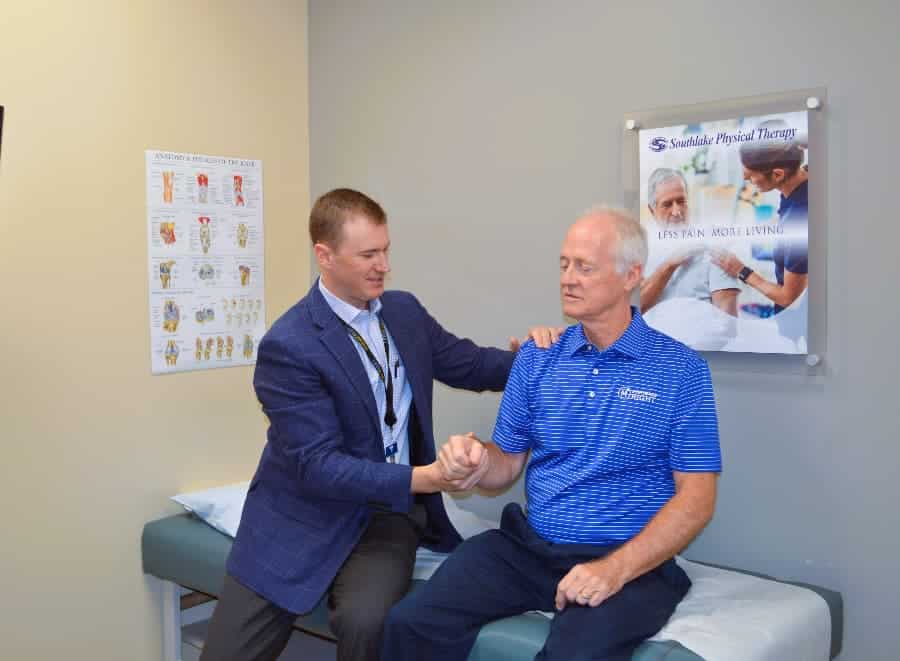
Dr. Jonathan Isbell examining patient shoulder
Patient in physical therapy doing shoulder exercises with resistance band

What Are the Treatment Options for Shoulder Bursitis?

Shoulder bursitis usually gets better with rest. The patient should take a break from repetitive activities that put stress on the shoulder, giving the bursae time to heal. In the meantime, the following methods may be used to control the pain and reduce swelling:

  • Ice packs
  • Over-the-counter pain relievers
  • Corticosteroid injections
 

Surgery for shoulder bursitis is rare. Physicians recommend surgical treatment only if the condition is severe or if the symptoms don’t get better with conservative care. The procedure involves removing or repairing damaged tissue in the shoulder. The inflamed bursae may be removed completely to create more room in the shoulder.

Physical therapy begins after surgery to help the patient recover their strength and range of motion.

Meet Our Team

If you have experienced a shoulder injury, then trust Southlake Orthopaedics with your care. Our multi-disciplinary team pulls from numerous medical specialties to provide conservative and surgical treatment for a wide range of orthopedic conditions. They support patients at every stage of recovery and can help you get back to your favorite activities. Meet our shoulder doctors here:

Find Expert Treatment for Shoulder Bursitis Near You in Alabama

Don’t let acute or chronic shoulder bursitis interfere with your lifestyle. Experience less pain, more living at Southlake Orthopaedics, where we offer state-of-the-art sports medicine care. With convenient locations near you in Hoover and Birmingham-Grandview, we serve patients across central Alabama. Contact us to learn more or to schedule your shoulder bursitis appointment.

FAQ About Shoulder Bursitis

What is the fastest way to relieve shoulder bursitis pain?

The best way to relieve pain caused by shoulder bursitis is to let the shoulder rest. Bursitis is caused by repetitive stress on the joint. It gets better when the shoulder has time to heal.

Is surgery required for shoulder bursitis?

Surgery is not usually required for shoulder bursitis. Most patients feel better after resting the shoulder. Ice, pain relievers, and injections may be recommended to reduce discomfort.

How long does it take to recover from shoulder bursitis?

Your expected recovery time depends on the severity of your injury. Most patients experience symptoms of bursitis for a few weeks.

What is the long-term outlook for shoulder bursitis?

If the shoulder is allowed to rest and heal properly, then the symptoms should eventually go away completely. Your physician may recommend continuing physical therapy for a few more months to reduce the risk of the bursitis coming back.

Can shoulder bursitis be prevented?

Patients can reduce the risk of shoulder bursitis by reducing overuse. Recommended steps include:

  • Stretching and warming up before physical exertion
  • Stretching and cooling down after exertion
  • Strengthening the shoulders with appropriate exercises
  • Taking breaks between training sessions
  • Resting when the shoulder starts to hurt