Dislocated Elbow

Understanding Elbow Conditions and Available Treatments

Dislocated Elbow Treatment Near You in Hoover and Birmingham, Serving Central Alabama

Dislocating an elbow is a frightening experience. The injury is sudden, painful, and debilitating, and many patients have concerns about their long-term function. Fortunately, the proper treatment can get patients back to their normal strength and range of motion. Southlake Orthopaedics is a multi-specialty team of physicians offering orthopedic care, including treatment for dislocated elbows in central Alabama, helping patients find less pain, more living after elbow injuries.

Key Takeaways

  • A dislocated elbow occurs when bones in the elbow joint are forced out of place.
  • Symptoms of a dislocated elbow include pain, swelling, bruising, and visible deformity around the affected elbow.
  • Simple dislocations can be treated conservatively, but complex and severe dislocations often require surgical realignment.
  • Southlake Orthopaedics provides comprehensive orthopedic care to help patients recover from dislocated elbows.

What Is a Dislocated Elbow?

A dislocated elbow occurs when the bones of the elbow joint are pulled out of place. The elbow joint contains three bones: the bone in the upper arm (humerus) and the two bones in the forearm (ulna and radius). The bones are connected by tough bands of connective tissue, called ligaments, that lock them in place to prevent abnormal movement. The joint also contains cartilage, which stabilizes the joint and lubricates it for smooth rotations.

A dislocated elbow occurs when one of the bones is forced out of place, usually stretching or tearing a ligament. Physicians assign different degrees of dislocation based on the types of damage present:

  • Simple dislocation: There are ligament injuries, but no bone fractures.
  • Complex dislocation: There are ligament injuries and bone fractures.
  • Severe dislocation: There is damage to the blood vessels and nerves.
 

The injury’s classification is used to determine how urgent treatment should be and what treatment options are available. The more complex and severe a dislocation is, the more likely the patient will need surgical treatment to get better.

Close-up image of tennis player holding injured elbow

What Are the Symptoms of an Elbow Dislocation?

The symptoms of an elbow dislocation depend on its severity. A partial dislocation, also called a subluxation, causes pain and feelings of instability in the elbow. Patients may experience:

  • Pain that gets worse when moving the elbow
  • Bruising on the inside or outside of the elbow
  • Swelling or warmth around the elbow
  • Feeling like the elbow shifts on its own
  • Being unable to use or move the elbow
 

A complete dislocation is much more obvious. The elbow feels extremely painful, and the arm is visibly deformed. There may be an odd twist at the elbow, or the forearm may bend in an unusual direction.

What Causes Elbow Dislocations?

Elbow dislocations occur when more force is applied to the elbow than the joint is able to withstand. Usually, this involves a rotating movement while the elbow is supporting weight. Common situations that lead to a dislocation include:

  • Falls: The person falls onto an outstretched arm. The force of landing involves a twisting motion that drives through the elbow, forcing the bones of the elbow joint out of alignment
  • Vehicle collisions: A passenger reaches forward to brace themselves for an impact. The force rotates the elbow outside of its normal range, causing a dislocation.
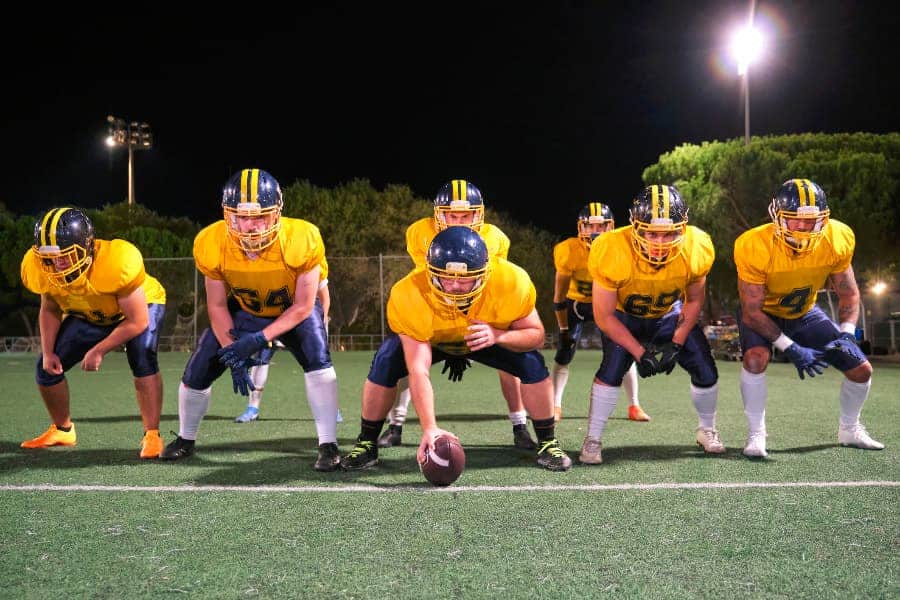
  • Sports: A wrestler or football player rotates their body with one hand planted on the ground. The elbow can’t rotate while it supports weight, so it dislocates.
 

Anyone can dislocate an elbow, but the people most at risk are children younger than 16 and adults older than 65. People who play contact sports or do repetitive arm movements for work are also more likely to dislocate their elbow. Finally, once a person has experienced an elbow dislocation, they are more likely to dislocate the same elbow. This is because the ligaments are weakened and cannot reliably stabilize the joint after injury.

Youth football players on line of scrimmage
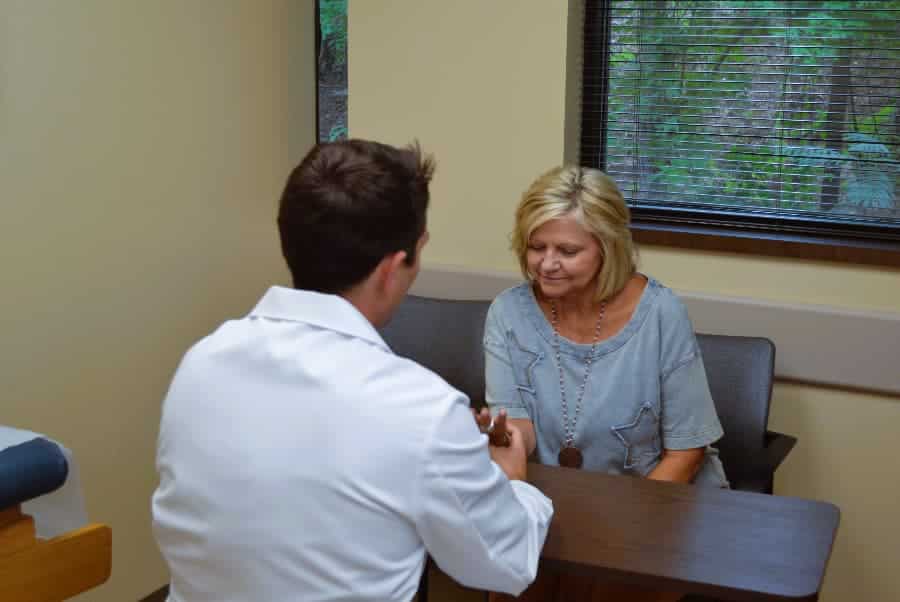
Dr. Jonathon Whitehead examining patient elbow

How Is a Dislocated Elbow Diagnosed?

Elbow dislocation diagnosis begins with a physical examination. The physician will examine the patient’s arm for swelling and deformity, evaluate their circulation, and check the nerve supply by testing sensation in the hand. They will also ask the patient questions about their symptoms and how the injury occurred, and they may check their medical history for previous dislocations.

A physical examination is often enough to diagnose elbow dislocations by itself. When medical imaging is requested, it is usually to determine how serious the dislocation is. X-ray imaging helps doctors determine the direction of the dislocation. It also reveals damage to the bone, telling the doctor whether the dislocation is simple or complex.

What Are the Treatment Options for a Dislocated Elbow?

The first goal of treatment for elbow dislocations is to restore the joint’s normal alignment. The patient is given sedatives and pain medications to reduce discomfort while the physician slowly returns the bones to their normal places. Afterward, the arm is placed in a splint to hold the joint in place while the ligaments heal. Physical therapy begins a few weeks later to help the patient regain their range of motion and strengthen the injured joint.

If the elbow joint does not stay aligned, then surgery may be required to restore the bone alignment. This is often the case with complex dislocations. Again, the arm is placed in a splint afterward to support the joint until the patient is ready for physical therapy.

Meet Our Team

If you have suffered an elbow dislocation, get help our experienced providers. Southlake Orthopaedics relies on multi-disciplinary expertise to help central Alabama patients recover from all types of injuries. Our team draws from multiple specialties to provide comprehensive orthopedic care at every stage of recovery. Meet our arm and elbow doctors below:

Find Expert Treatment for a Dislocated Elbow Near You in Alabama

A dislocated elbow doesn’t have to end your sports career. Patients who are struggling with pain and lost mobility can experience less pain, more living with Southlake Orthopaedics. We offer comprehensive care at locations in Hoover and Birmingham-Grandview, reaching patients across the state of Alabama. Contact us to learn more or to schedule a consultation.

FAQ About Dislocated Elbows

Who is at risk of a dislocated elbow?

While anyone can dislocate their elbow, the condition is most common in people who have weak ligaments or a loose bone structure. This includes children under 16, seniors over 65, people with past dislocations, and people with conditions that weaken the ligaments.

Is surgery required for dislocated elbows?

Surgery is not usually required for partial or simple dislocations. These injuries can usually be treated conservatively with reduction, splinting, and physical therapy. Surgery may be required to realign complex and severe dislocations.

How serious is a dislocated elbow?

A dislocated elbow is always considered a medical emergency. Simple dislocations and partial dislocations (subluxations) are less serious, though they still require urgent treatment. Complex and severe dislocations are major injuries that need immediate medical attention.

How long does it take to recover from an elbow dislocation?

Patients start to feel better as soon as the joint is back in place. Full recovery from a simple dislocation takes four to six weeks. Full recovery from a complex dislocation, especially one that required surgery, takes longer.

What is the long-term outlook for a dislocated elbow?

Some patients achieve a full recovery with no long-term consequences. Others are never able to fully extend the arm again, even after treatment. Fortunately, the arm can work well even with a reduced range of motion.